

City of Knowledge
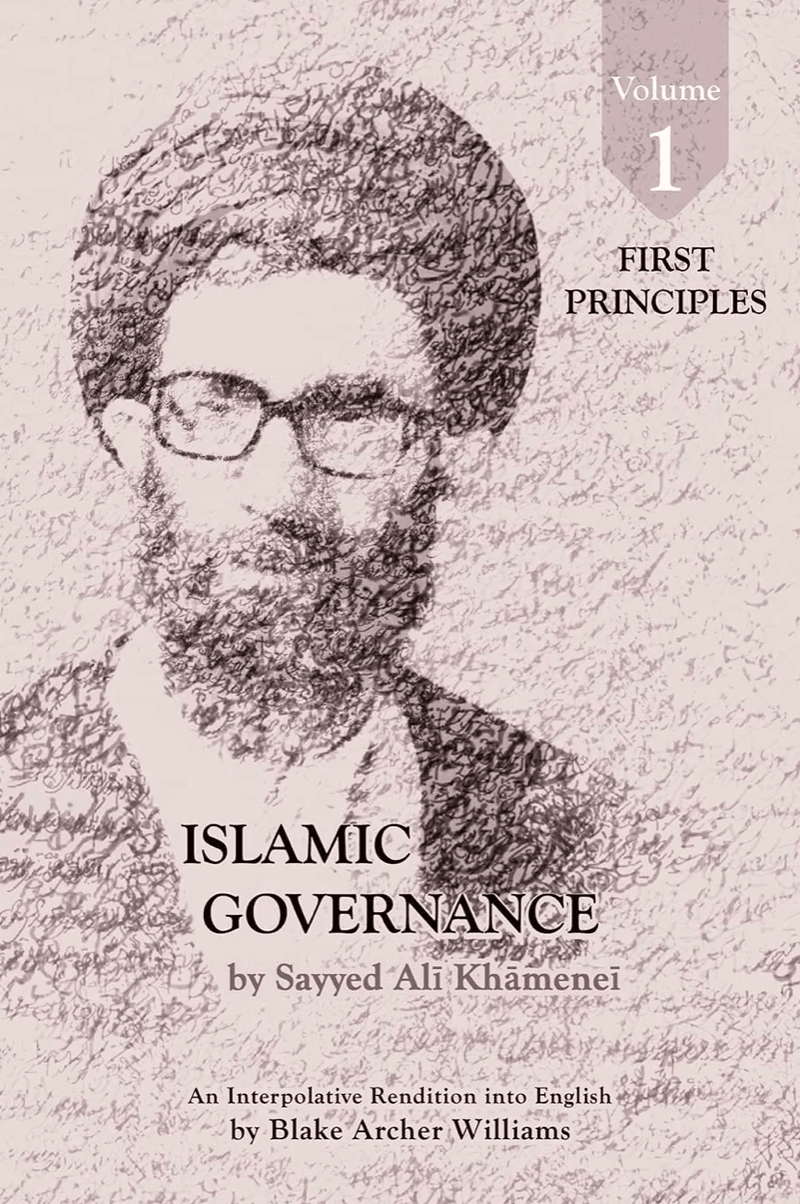
Islamic Governance by Sayyed Ali Khamenei
Product Description
Authored by one of the foremost theoreticians and practitioners of the revolutionary Islamic movement that culminated in the triumph of the Islamic Revolution in Iran, the book provides a genuine alternative both to the morally bankrupt liberal social order of the West, as well as to the defunct and sterile alternatives provided within the rest of the Islamic world.
First principles (Volume One) begins by an explication of the theological based as to why God reserved the ordering of mankind’s affairs exclusively for Himself, and proceeds to discuss the institution of prophethood. It provides an in-depth definition of the Islamic keyword wilayah and of “those who are invested with authority (the Oul’ul-Amr)”. Ayatollah Khamenei then proceeds to explain the meaning and purpose of the imamate, and ends with a brief survey of the concept of Islamic messianism (mahdawīya) and the effects of believing in the advent of the Mahdi. The reader will obtain a solid undertaking of the theoretical and underpinnings of a system of Islamic governance that is based on principles established in the Holy Quran and authentic Ahadith. While thematically interconnected, each volume stands on its own and can be read as an independent volume.
Imamate (Volume Two), translated by Blake Archer Williams, provides a theoretical framework for Islamic governance, particularly focusing on the institution of the Imamate. It delves into the theological foundations of governance derived from the Quran and traditions, explaining the role of divine authority in the leadership of mankind. This volume discusses the concept of wilayah and the unique position of the Imamate in guiding the Muslim community, with an emphasis on Shia thought.
Pages Vol1: 260
Pages Vol2: 242
Pages Vol3: 184